The Scribe Tribe

26 June 2026 2 Kings 25:1-12
“He burned the House of the Lord, the palace of the king, and all the houses of Jerusalem.” (2 Kings 25:9)
In the Exile the Israelites lost their Temple, their priesthood, their country, everything that made them Jewish. The only things they could take with them into Babylonian captivity were things they could carry. It was the worst catastrophe that had ever befallen them, and the most faithful among them knew it was all their own fault.
Fortunately it does not appear to have been the intention of the Babylonians to wipe out Jewishness, and so the Israelites in captivity were permitted to reconstruct the sources of their life together. It was during the Babylonian Captivity that most of what we know today as the Old Testament finally reached written form.
The Exile was also the time when a new class of people emerged in Jewish society, a class well-known to readers of the New Testament – the Scribes. | Almost 90% of the New Testament can be reconstructed from quotations in the early Christian Fathers alone, independent of the tens of thousands of ancient manuscripts of the New Testament in Greek and other languages. Jesus is, by far, the most exhaustively documented character from all classical antiquity. |
The Scribes in the Exile were almost entirely laymen who dedicated themselves to the study and copying of the biblical text, and as time went by they took a leading role in helping the people to understand it. The faithfulness of the Scribes in copying holy scripture is dramatically evident in the Dead Sea Scrolls, discovered in 1947, and dating to the third century B.C. Experts have found that the Hebrew text of the Old Testament today is, for all practical purposes, identical to the texts discovered in the Dead Sea Scrolls. There is exceptionally high confidence that the Old Testament texts that we are reading today are the very same ones read by the faithful at the time of Alexander the Great, and all of this is attributable to the careful dedication of the Scribes. Their world had gone up in flames – Nebuchadnezzar “burned the House of the Lord, the palace of the king, and all the houses of Jerusalem” (2 Kings 25:9) – and the Scribes meticulously put it all back together.
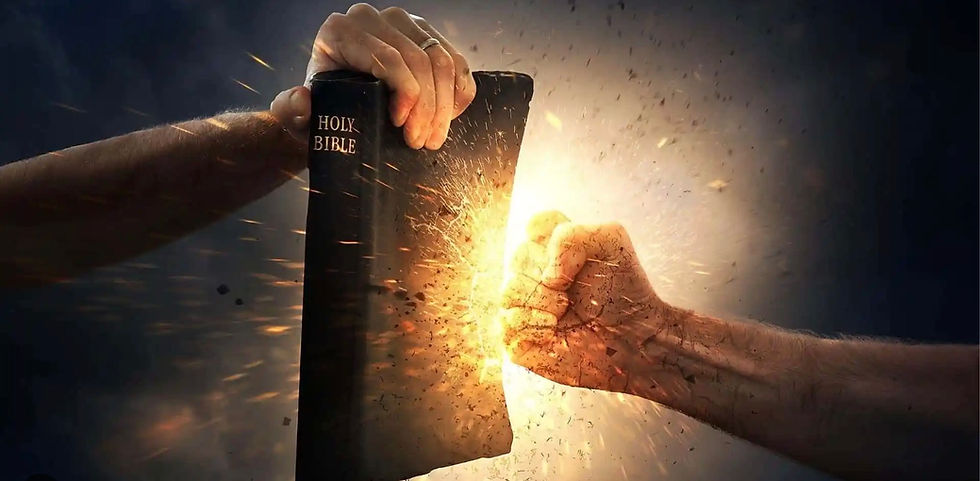
It seemed intuitively obvious to the Scribes that God’s purpose for the Exile was not destruction, but discipline and purification; but the Israelites would miss all of that spiritual benefit if they failed to attend carefully to the sacred story. That intuition was not lost on the early Church. By the mid-third century A.D., when the government got involved in the persecution of Christians, Roman authorities had worked out that to destroy the Christians it was necessary to destroy their holy books. So at the time of the Great Psersecution of A.D. 303 the emperor Diocletian made it a capital offense to be in possession of a Bible. Many texts were burned, but not nearly enough. Today, over 24,000 ancient manuscripts and fragments of the New Testament still exist in Greek, and other early translations in Latin, Syriac, and Coptic. Almost 90% of the New Testament can be reconstructed from quotations in the early Christian Fathers alone, independent of the tens of thousands of ancient manuscripts of the New Testament in Greek and other languages. Jesus is, by far, the most exhaustively documented character from all classical antiquity. Christianity exists today because new generations of Scribes told the story and wrote it down.
The “Scribes and Pharisees” of the New Testament are often portrayed as the villains of the story, and in a certain sense some of them were. Some of them really did lobby hard for the execution of Jesus the Messiah. But there were other Scribes, people who studied the text very hard, taught about it and wrote about it, and proclaimed Jesus as God With Us. St. Paul and the authors of the gospels were kinds of Scribes. The early Church Fathers were kinds of Scribes. And there are Scribes in these days, who are discovering, or rediscovering, and announcing the message of the Bible as the world’s last and greatest hope. May their tribe increase.


Comments